Inquiries:
fay@faysafaris.com
 +447700094142 +447700094142
 +255784334511 +255784334511
|
|
Most visitors to Tanzania will fly in via
Dar es Salaam, which means “Haven of Peace”, reflecting the relaxed
and informal atmosphere of the city.
From here visitors can take a fly-in safari to the game reserves to the
south. Less frequented than the national parks in the north,
the southern parks provide a sense of African adventure unsurpassed
anywhere on the continent.
The principal areas are Selous Game Reserve and Mikumi, Ruaha and the
Udzungwa Mountains
National Parks.
MIKUMI NATIONALPARK
Located north of the Selous Reserve,less than 300 km from Dar-es-Salaam,
is the Mikumi National Park. Because of its accessibility it is one of the
most popular parks in Tanzania and is an important centre for education
where students go to study ecology and conservation. A wide range of
wildlife inhabits its
3,230 sq km area. The Mikumi flood plain, with its open grasslands,
dominates the park together with the mountain ranges that border the park
on two sides.
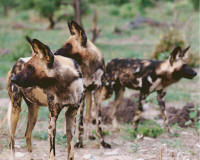
Lion is commonly seen as are packs of wild dog, rare elsewhere in Africa.
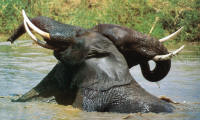
Elephant may be encountered and other animals frequently observed are
buffalo, civet, eland, giraffe, impala, kudu, reedbuck, warthog,
waterbuck, wildebeest, zebra and Lichtenstein’s
hartebeest. Near the southern boundary of the park it is possible to see
groups of female and young bachelor sable with their one dominant male.
Crocodiles, monitor lizard and python are other residents.
At the southern end of the flood plain, in the Kikoboga area, families of
yellow baboon live while wallowing hippos are frequently joined in their
pools by flocks of
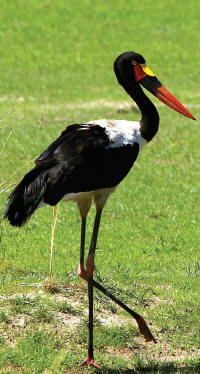
open-billed storks, hunting for molluscs.
Over 400 species of birds have been observed in the park, many of which
are Eurasian migrants who stay between October and April.
Getting there: A four hour drive, or a one hour flight,
from Dar-es-Salaam.
RUAHA NATIONAL
PARK
One of Tanzania’s best kept wildlife
secrets is the Ruaha National Park.
Previous inaccessibility has ensured
it has remained virtually unchanged
for centuries, unaffected by the
ravages of mankind. Covering
10,300 sq km it is the country’s
second largest park and biggest
elephant sanctuary. Its name derives
from the Great Ruaha River which
flows along its eastern border,
creating spectacular gorges. Flowing
into the Rufiji River, the Great Ruaha
is home to hippo and crocodile.
Waterbuck, reedbuck and buffalo
venture to the river’s edge to drink,
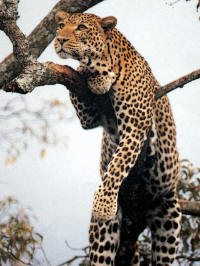
attracting the attention of lion,
leopard, cheetah, hyena and wild
dog - or African Hunting dog as
they should correctly be called.
Various antelope species, such as
eland, greater and lesser kudu,
impala, sable and roan antelope,
Grant’s gazelle and the tiny dik-dik
thrive in the grasslands bordering
the river alongside giraffe, zebra,
warthog, wild cat mongoose, porcupine and civet.
Birdlife is prolific, over 370
species have been recorded, some
of which are not found in northern
Tanzania. Eurasian migrants flock to
Ruaha twice a year - March to April
and October to November - joining
the resident kingfishers, hornbills,
sunbirds, egrets and plovers.
Best months for game viewing are
during the dry season from May to
December, when the animals are
concentrated around the shrinking
water-courses. The park has an airstrip for light aircraft on the
western bank of the river.
Getting there: Up to a ten
hour drive, or a one and a
half hour flight, from Dar-es-Salaam.
SELOUS GAME
RESERVE
The Selous Game Reserve is the
largest protected wildlife area in
Africa. A UN World Heritage site,
this pristine, uninhabited area is
larger than Switzerland. Only in the Serengeti will visitors
see a greater concentration of
wildlife. Yet Selous boasts Tanzania’s
largest population of elephant as
well as large numbers of lion,
leopard, African hunting dog,
buffalo and hippo.
Once home to over 3,000 black rhino there are sadly now only a few
hundred left. They tend to hide in the
dense thickets but sightings are
possible. Species commonly seen are
bushbuck, red and blue duikers,
eland, hartebeest, hyena,
klipspringer, impala, giraffe, oryx, reedbuck, waterbuck and zebra.
Yellow baboon and vervet and blue
monkey are always a common sight
while families of black and white
colobus may sometimes be seen
moving from tree to tree.
Endangered red colobus inhabit only
the west of the reserve but visits to
observe this rare breed can be
arranged.
The bird-life in the Selous is
prolific and the 400 species
recorded include the globally
threatened wattled crane and the
corncrake.
The topography of the park varies
from rolling savannah woodland,
grassland plains and rocky outcrops
cut by the Rufiji River and its
tributaries, the Kilombero and
Luwegu, which together cover the
greatest catchments area in East
Africa. The Rufiji, which flows from
north to south, provides the lifeblood
of the Selous and sailing or
rafting down the river is a superb
method of seeing game, especially
during the dry season between June
and October. Crocodiles, hippo and
an array of grazing antelope are
seen.
Linked to the Rufiji is Lake
Tagalala, where waterbuck,
reedbuck and bushbuck gather at
the water’s edge. In the long
grassland, safari enthusiasts may get
a chance to see rare sable antelope,
greater kudu - or lion.
The park gets its name from the hunter-explorer Frederick
Courtney Selous, whose books were best sellers in Victorian England.
Walking safaris, game drives and boat trips are organised. The best time
to visit is during the dry season, when game is forced from hiding places
to the river to drink.
The waters of the Kilombero Game Controlled Area are home to the ferocious
tiger fish and vandu catfish, the latter equipped with a primitive set of
lungs which allows it to migrate from one landlocked pool to another.
Getting there: Between a seven and nine hour drive, but only in the dry
season, or a one and a half hour flight from Dar es Salaam.
UDZUNGWA MOUNTAINS NATIONAL PARK
Udzungwa Mountains National Park is a conservation area of about 2,000 sq
km. It lies in the Iringa and Morogoro regions of south-central
Tanzania where it is bordered by the Great Ruaha River to the north and
the Mikumu-Ifakara road to the east. The major attraction of the park is
its bio-diversity and unique rainforest where many rare plants, not found
anywhere else in the world, have been identified. These
range from a tiny African violet to 30 meter high trees. As well as being
home to about six types of primates, including two endemic and endangered
species - the Iringa red colobus monkey and the Sanje crested mangabey -
the
plateau supports populations of elephant, buffalo, lion and leopard.
Visitors should not expect to necessarily see these larger species however
as they tend to be found in the less accessible area of the park. Bush
baby, or galago as they are sometimes called, bush pig, civet, duiker,
honey badger and three types of mongoose are more likely to be seen.
The park which is about 65 km, or a two hour drive, south west of Mikumi
National Park, is also home to a number of rare forest birds many of which
are only found in this area of Tanzania.
Getting there: A five hour drive from Dar es Salaam.
|
|